
Representative money
The system of commodity money in many instances evolved into a system of representative money. This occurred because banks would issue a paper receipt to their depositors, indicating that the receipt was redeemable for whatever precious goods were being stored (usually gold or silver money). It didn't take long before the receipts were traded as money, because everyone knew they were "as good as gold". Representative paper money made possible the practice of fractional reserve banking, in which bankers would print receipts above and beyond the amount of actual precious metal on deposit.
So in this system, paper currency and non-precious coinage had very little intrinsic value, but achieved significant market value by being backed by a promise to redeem it for a given weight of precious metal, such as silver. This is the origin of the term "British Pound" for instance; it was a unit of money backed by a Tower pound of sterling silver, hence the currency Pound Sterling. For much of the nineteenth and twentieth centuries, many currencies were based on representative money through use of the gold standard.
Sunday, October 21, 2007
History of Money (Part 3)


HIstory of Money (Part 2)
Standardized coinage
It was the discovery of the touchstone which led the way for metal-based commodity money and coinage. Any soft metal can be tested for purity on a touchstone, allowing one to quickly calculate the total content of a particular metal in a lump. Gold is a soft metal, which is also hard to come by, dense, and storable. As a result, monetary gold spread very quickly from Asia Minor, where it first gained wide usage, to the entire world.
Using such a system still required several steps and mathematical calculation. The touchstone allows one to estimate the amount of gold in an alloy, which is then multiplied by the weight to find the amount of gold alone in a lump.
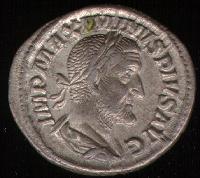
To make this process easier, the concept of standard coinage was introduced. Coins were pre-weighed and pre-alloyed, so as long as the manufacturer was aware of the origin of the coin, no use of the touchstone was required. Coins were typically minted by governments in a carefully protected process, and then stamped with an emblem that guaranteed the weight and value of the metal. It was, however, extremely common for governments to assert the value of such money lay in its emblem and thus to subsequently debase the currency by lowering the content of valuable metal.
Although gold and silver were commonly used to mint coins, other metals could be used. For instance, Ancient Sparta minted coins from iron to discourage its citizens from engaging in foreign trade. In the early seventeenth century Sweden lacked more precious metal and so produced "plate money," which were large slabs of copper approximately 50 cm or more in length and width, appropriately stamped with indications of their value.
Metal based coins had the advantage of carrying their value within the coins themselves — on the other hand, they induced manipulations: the clipping of coins in the attempt to get and recycle the precious metal. A greater problem was the simultaneous co-existence of gold, silver and copper coins in Europe. English and Spanish traders valued gold coins more than silver coins, as many of their neighbors did, with the effect that the English gold-based guinea coin began to rise against the English silver based crown in the 1670s and 1680s. Consequently, silver was ultimately pulled out of England for dubious amounts of gold coming into the country at a rate no other European nation would share. The effect was worsened with Asian traders not sharing the European appreciation of gold altogether — gold left Asia and silver left Europe in quantities European observers like Isaac Newton, Master of the Royal Mint observed with unease.
Stability came into the system with national Banks guaranteeing to change money into gold at a promised rate; it did, however, not come easily. The Bank of England risked a national financial catastrophe in the 1730s when customers demanded their money be changed into gold in a moment of crisis. Eventually London's merchants saved the bank and the nation with financial guarantees.

History of money (Part 1)
The emergence of money
The use of proto-money may date back to at least 100,000 B.P. Trading in red ochre is attested in Swaziland, from about that date, and ochre seems to have functioned as a proto-money in Aboriginal Australia. Shell jewelery in the form of strung beads also dates back to this period[1] and had the basic attributes needed of early money. In cultures where metal working was unknown, shell or ivory jewelery were the most divisible, easily storeable and transportable, scarce, and hard to counterfeit objects that could be made. It is highly unlikely that there were formal markets in 100,000 B.P. (any more than there are in recently observed hunter-gatherer cultures). Nevertheless, proto-money would have been useful in reducing the costs of less frequent transactions that were crucial to hunter-gatherer cultures, especially bride purchase, splitting property upon death, tribute, and inter-tribal trade in hunting ground rights (“starvation insurance”) and implements. In the absence of a medium of exchange, all of these transactions suffer from the basic problem of barter — they require an improbable coincidence of wants or events. Jewelery has often been used for currency and wealth storage in some historical and contemporary societies, especially those in which modern forms of money are scarce, in addition to being used for decoration and display of status and wealth.
In cultures, of any era, that lack money, bartering and some system of in-kind "credit" or "gift exchange" would be the only ways to exchange goods. Bartering has several problems, most notably the coincidence of wants problem. If one wishes to trade fruit for wheat, it can only be done when the fruit and wheat are both available at the same time and place, which may be for a very brief time, or may be never. With an intermediate commodity (whether it be shells, rum, gold, etc.) fruit can be sold when it is ripe in exchange for the intermediate commodity. This intermediate commodity can then be used to buy wheat when the wheat harvest comes in. Thus the use of money makes all commodities become more liquid.
Where trade is common, barter systems usually lead quite rapidly to several key goods being imbued with monetary properties. In the early British colony of New South Wales in Australia, rum emerged quite soon after settlement as the most monetary of goods. When a nation is without a fiat currency system it is quite common for the fiat currency of a neighboring nation to emerge as the dominant monetary good. In some prisons where conventional money is prohibited, it is quite common for goods such as cigarettes to take on a monetary quality. Gold has emerged naturally from the world of barter again and again to take on a monetary function. It should be noted that the emergence of monetary goods is not dependent on central authority or government. It is a quite natural market phenomenon.

Sunday, October 14, 2007
American money
The American money system is logical and very easy to use. It is based on the dollar ($1.00), on which all cash and coins are dependent. There are 100 cents in a dollar. Coins are fractions of a dollar, for example: a quarter ($0.25) is 1/4 of a dollar, a dime ($0.10) is 1/10th of a dollar, and so forth. Paper bills are multiples of a dollar: for example, a $5 bill.
US paper currency
The twenty, ten, five, and one are the most frequently used bills.
When speaking about money, $1 is referred to as "a one", "a dollar", "a dollar bill", or "a buck"; $5 is "a five", "five dollars", "a five dollar bill", or "five bucks"; etc. Another way to refer to money is to call it "cash."
The five, ten, twenty, fifty and hundred dollar bills have been recently redesigned to incorporate new security features. Both the new and old versions are in circulation. The one is not being redesigned as it is not considered as likely to be counterfeited. Also in use but not as frequently seen are the $2, $50 and $100 denominations. The two dollar bill is rare - people seem to collect, rather than spend, them. $50 and $100 bills are not as commonly used and many places may not accept them for small purchases. You probably won't ever see any larger-value denominations such as $500, $1,000, $5,000, and $10,000. People not familiar with these bills should probably not accept them, because counterfeit, or fake, currency does exist, especially in the higher and more unfamiliar denominations. For pictures of the new and old American paper currency, visit the Bureau of Engraving and Printing.
Shop clerks sometimes consider the use of very large bills to pay for very small purchases to be an annoyance. For example, try not to use a $20 to pay for a 35¢ pack of gum! It would be better to pay with a smaller bill or some coins. If you don't have anything smaller, it is polite to say so to the clerk.
The Canadian currency system is similar to the American. Canadian paper money typically needs to be converted into American before use in the United States. For more about Canadian money, including pictures of the new bank notes, see the Bank of Canada website.
US coins
The most commonly used coins are the quarter, dime, nickel, and penny.
Each type of coin has a unique size and design, usually with the image of a president or other famous American person on the front. Quarters have been made with varying images on their back sides, honoring the 200th anniversary of the USA, and honoring each state. Coins that are not used as often include the Susan B. Anthony dollar coin, and the Kennedy half-dollar, also known as the 50-cent piece.
Canadian coins are seen in the northern United States and are also available in quarters, dimes, nickels, and pennies. However, not all stores and restaurants accept them; typically, the closer you are to Canada, the more accepted they are. Canadian coins may be accepted as equal in value to US coins, but the exchange rate usually places a higher value on the US versions, so be careful not to accept too many.
Practical use
The quarter is one of the most useful coins. If you are a student, be sure to save these! They can be used in almost any coin-operated machine: clothes washers & dryers, arcade games, pay phones, and vending machines dispensing food, drinks, stamps, tickets, newspapers, etc. Dimes and nickels can usually be used in pay phones and vending machines. Many vending machines will take small bills, such as ones, fives, and tens, but the change you get back will all be in coins. Often there will be a dollar changer near coin-operated machines which dispenses quarters in exchange for small bills. One word of caution: vending machines do not take dollar coins, half-dollars, pennies, or Canadian coins.
Credit or charge cards are being used more and more, even for buying small items. Many Americans don't like to carry much cash, and the cards are convenient and safe to use. They are accepted almost everywhere, but not at fast food restaurants! Traveler's checks are a good idea for visitors also. You won't have to carry large amounts of cash with you, and the checks can be replaced if they get lost or stolen.
In a related article, we discuss automatic teller machines, or ATMs. These machine are a popular and convenient way to access cash.
Visit our ESL Corner to learn about "making change"!
By Susan Ernenwein and Alice Hoover


